
Предпросмотр проекта

Полную презентацию можно получить по почте после оплаты
Что вы получите
10–15 слайдов
Профессиональный дизайн
Текст для каждого слайда
Формат — PPTX
Готовая презентация за несколько минут
Основная информация
Название
Народ якутии на английском языке
Краткое описание
Презентация рассказывает о народе Якутии, его культуре, традициях и особенностях. В ней представлены основные сведения о жизни и истории этого народа на английском языке.
Текст презентации
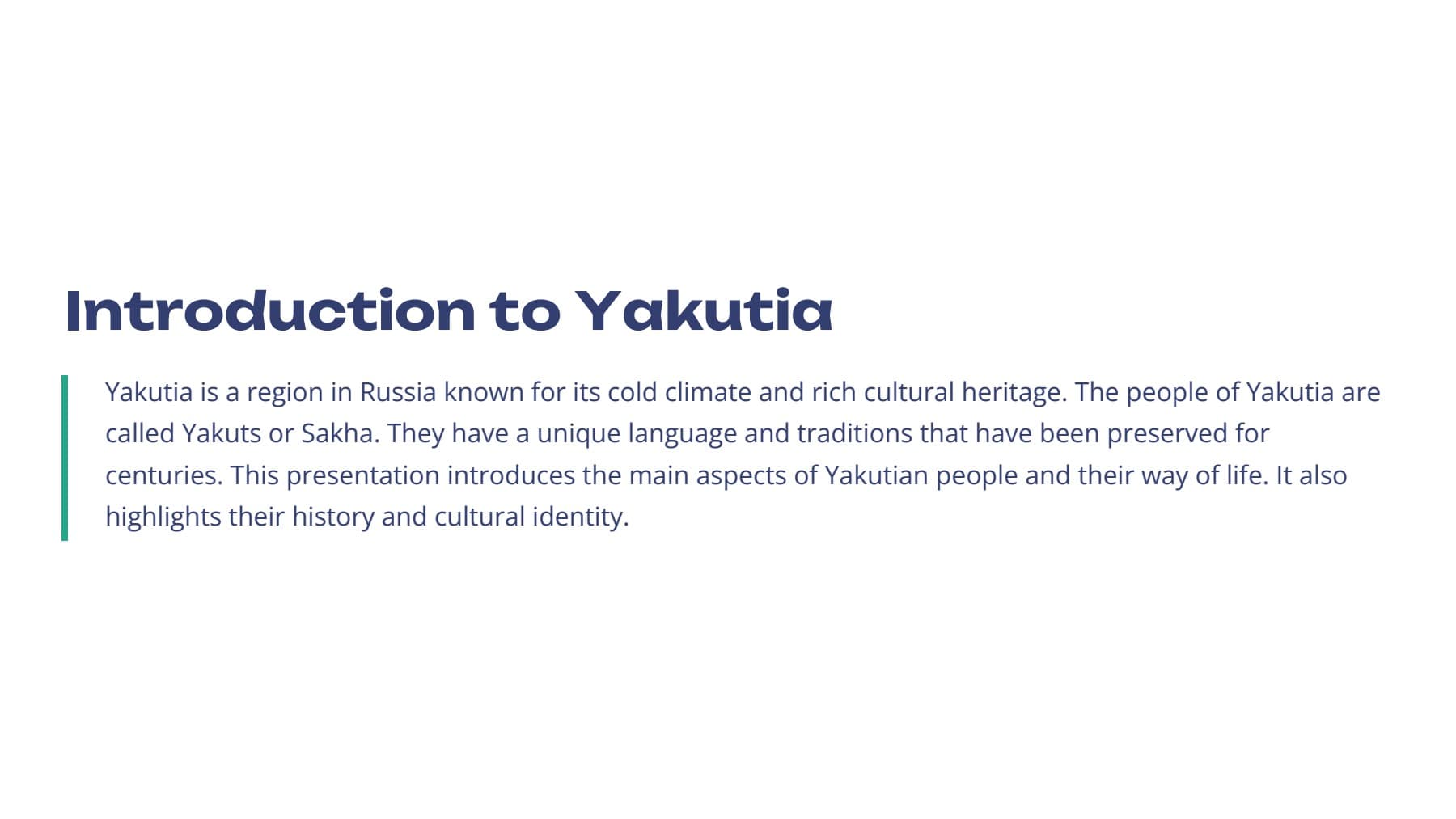
1. Introduction to Yakutia
Yakutia is a region in Russia known for its cold climate and rich cultural heritage. The people of Yakutia are called Yakuts or Sakha. They have a unique language and traditions that have been preserved for centuries. This presentation introduces the main aspects of Yakutian people and their way of life. It also highlights their history and cultural identity.
2. Geography of Yakutia
Yakutia is the largest region in Russia, located in the northeastern part of the country. It is known for its vast forests, rivers, and permafrost. The climate is extremely cold in winter, with temperatures dropping below -50 degrees Celsius. The geography has influenced the lifestyle and traditions of the Yakutian people. They have adapted to survive in harsh environmental conditions.
3. History of the Yakut People
The Yakut people have a long history that dates back thousands of years. They originally migrated from Central Asia and settled in Siberia. Over time, they developed their own language and culture. The Yakuts have preserved many ancient traditions despite influences from Russia and other cultures. Their history is a story of resilience and adaptation.
4. Language and Identity
The Yakut language, also known as Sakha, is a Turkic language spoken by the majority of the population. It is an important part of their cultural identity. Many Yakuts are bilingual, speaking both Sakha and Russian. Language plays a key role in maintaining their traditions and community bonds. Efforts are ongoing to preserve and promote the Yakut language.
5. Traditional Clothing
Yakutian traditional clothing is designed to protect against the cold. Men and women wear fur coats, hats, and boots made from animal skins. These clothes are often decorated with intricate patterns and symbols. Traditional clothing is worn during festivals and special occasions. It reflects their connection to nature and their environment.
6. Festivals and Celebrations
Yakutian festivals are important cultural events that celebrate their heritage. One of the main festivals is Ysyakh, a summer celebration of the sun and nature. During festivals, people perform traditional music, dance, and rituals. These events strengthen community bonds and preserve cultural traditions. They also attract visitors interested in Yakutian culture.
7. Traditional Music and Dance
Music and dance are vital parts of Yakutian culture. They use traditional instruments like the khomus, a type of jaw harp. Songs often tell stories about nature, ancestors, and daily life. Dance performances feature energetic movements and colorful costumes. These art forms are passed down through generations and remain popular today.
8. Yakutian Cuisine
Yakutian cuisine is based on local ingredients such as fish, meat, and berries. Dishes are often hearty and designed to sustain people in cold weather. Traditional foods include fish soup, dried meat, and berry preserves. Food plays an important role in festivals and family gatherings. It reflects the natural environment and resourcefulness of the Yakutian people.
9. Modern Life and Challenges
Today, Yakutian people live in both rural and urban areas. They face challenges such as maintaining their language and traditions in a modern world. Economic development and climate change also impact their way of life. Despite these challenges, many Yakuts work to preserve their cultural heritage. They continue to adapt and thrive in changing times.
10. Conclusion and Summary
The Yakut people have a rich cultural heritage that is deeply connected to their environment and history. Their language, traditions, and festivals reflect their unique identity. Despite modern challenges, they remain proud of their heritage and continue to preserve their culture. Understanding the Yakutian people helps appreciate the diversity of human cultures around the world.