
Предпросмотр проекта
Полную презентацию можно получить по почте после оплаты
Что вы получите
10–15 слайдов
Профессиональный дизайн
Текст для каждого слайда
Формат — PPTX
Готовая презентация за несколько минут
Основная информация
Название
Официальные и не официальные символы россии на английском
Краткое описание
This presentation explores the official and unofficial symbols of Russia. It explains their significance and how they represent the country's identity. The focus is on symbols recognized both officially and popularly.
Текст презентации
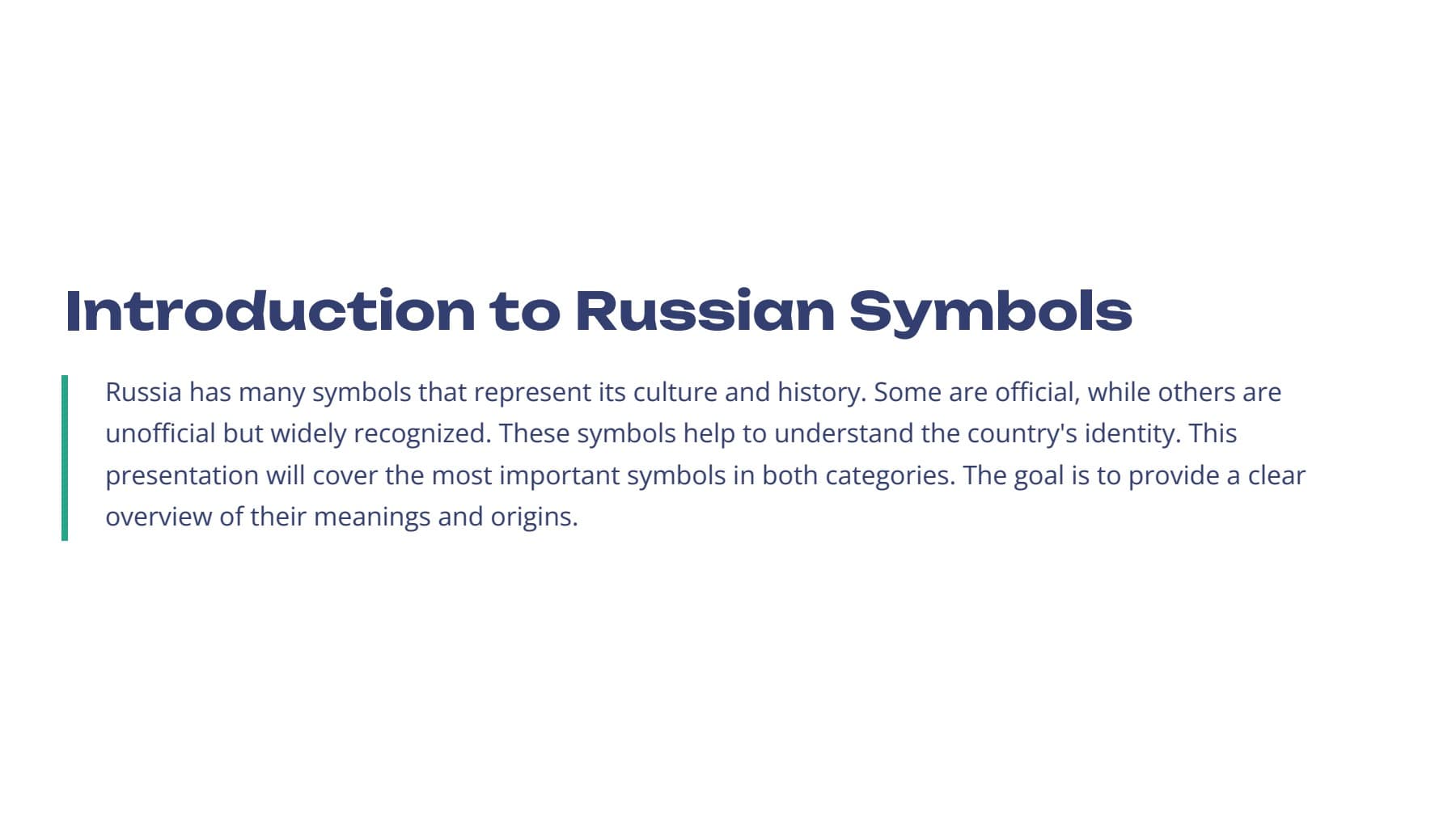
1. Introduction to Russian Symbols
Russia has many symbols that represent its culture and history. Some are official, while others are unofficial but widely recognized. These symbols help to understand the country's identity. This presentation will cover the most important symbols in both categories. The goal is to provide a clear overview of their meanings and origins.
2. National Flag of Russia
The Russian flag consists of three horizontal stripes: white, blue, and red. It is an official symbol of the country and appears on government buildings and documents. The colors have historical and cultural meanings. The flag represents the unity and sovereignty of Russia. It is recognized worldwide as a symbol of the nation.
3. Coat of Arms of Russia
The coat of arms features a double-headed eagle holding a scepter and an orb. It is an official symbol used by the government. The eagle is crowned with three crowns, symbolizing sovereignty. The shield on the eagle shows Saint George slaying a dragon. This emblem reflects Russia's history and authority.
4. Russian National Anthem
The national anthem is an important official symbol. It expresses patriotism and national pride. The lyrics were written by Sergey Mikhalkov, and the music composed by Alexander Alexandrov. The anthem is played at official events and sports competitions. It unites the people through shared history and values.
5. Russian Language
The Russian language is a key cultural symbol. It is the official language and used by millions of people. The language connects different regions and communities. It has a rich literary tradition. The language is a vital part of Russia's national identity.
6. Matryoshka Dolls
Matryoshka dolls are traditional Russian nesting dolls. They are an unofficial cultural symbol recognized worldwide. These dolls symbolize family, fertility, and Russian craftsmanship. They are often decorated with bright colors and intricate designs. Matryoshkas are popular souvenirs and represent Russian folk art.
7. The Russian Bear
The bear is an unofficial symbol of Russia often used in political and cultural contexts. It represents strength, resilience, and power. The image of the bear appears in cartoons, logos, and literature. It has become a symbol of the country's natural wildlife. The bear reflects Russia's vast wilderness and robust character.
8. Russian Samovar
The samovar is a traditional Russian tea-making device. It symbolizes hospitality and social gatherings. Although not an official symbol, it is widely recognized as part of Russian culture. The samovar has historical significance and is often associated with family and tradition. It represents warmth and community life.
9. Unofficial Symbols in Popular Culture
Many symbols appear in Russian movies, music, and art. These include the balalaika, the Russian hat, and folk patterns. They help to promote national identity and cultural pride. These symbols are not official but are important in everyday life. They reflect the diverse cultural heritage of Russia.
10. Conclusion and Summary
Russia's symbols, both official and unofficial, play a vital role in representing the country's identity. Official symbols like the flag and coat of arms are used in government and formal contexts. Unofficial symbols like the matryoshka and bear are popular in culture and everyday life. Together, they showcase Russia's rich history, culture, and resilience.