
Предпросмотр проекта

Полную презентацию можно получить по почте после оплаты
Что вы получите
10–15 слайдов
Профессиональный дизайн
Текст для каждого слайда
Формат — PPTX
Готовая презентация за несколько минут
Основная информация
Название
Все жизнеобеспечивающие системы организма человека на английском языке уровень б2
Краткое описание
This presentation provides an overview of the essential systems that sustain life in the human body. It explains how these systems work together to maintain health and functionality. The focus is on understanding their roles and importance.
Текст презентации
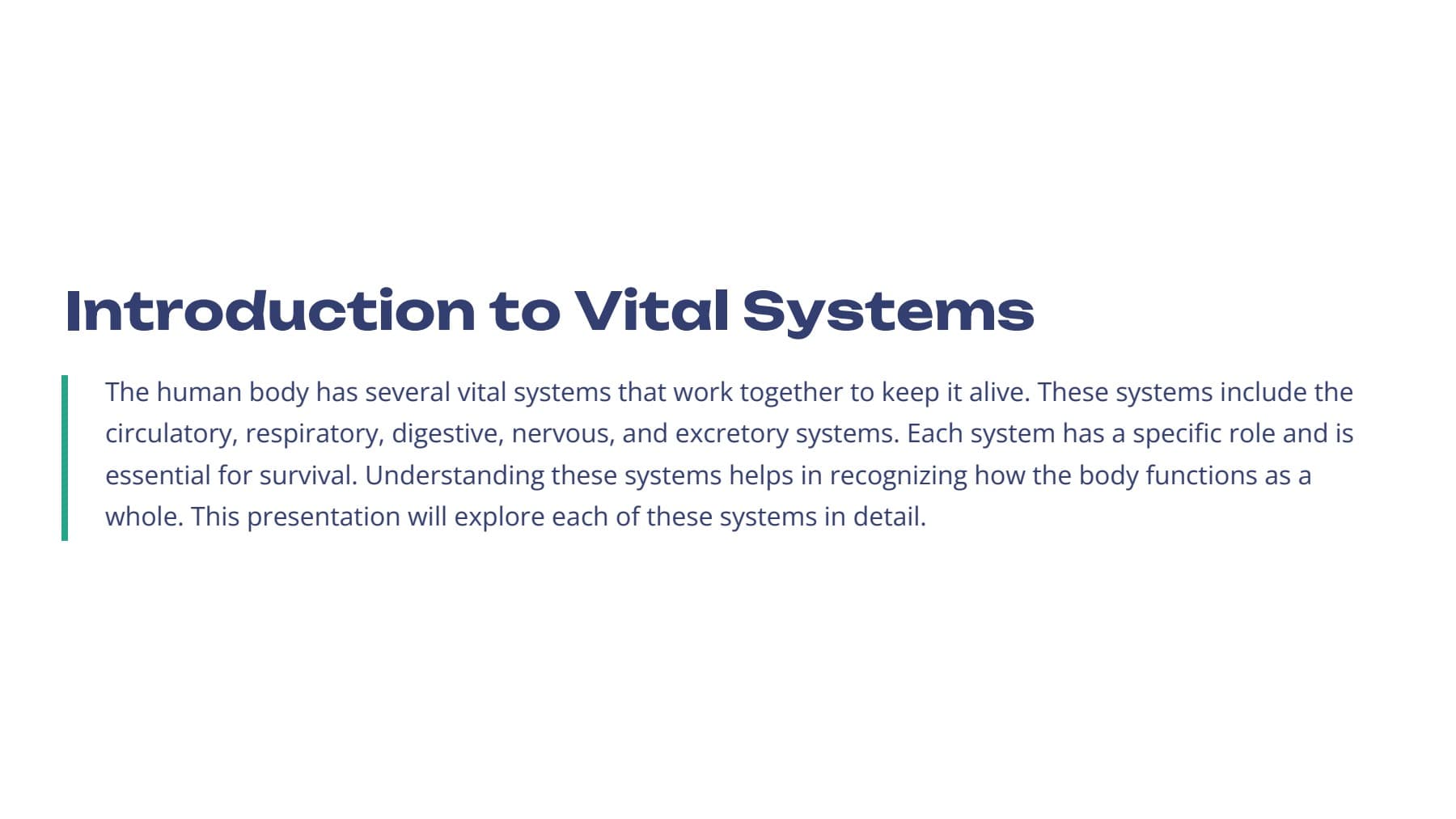
1. Introduction to Vital Systems
The human body has several vital systems that work together to keep it alive. These systems include the circulatory, respiratory, digestive, nervous, and excretory systems. Each system has a specific role and is essential for survival. Understanding these systems helps in recognizing how the body functions as a whole. This presentation will explore each of these systems in detail.
2. Circulatory System
The circulatory system is responsible for transporting blood, nutrients, oxygen, and waste products throughout the body. It consists of the heart, blood vessels, and blood. This system helps maintain homeostasis and supports other organs. Proper functioning of the circulatory system is crucial for overall health. It also plays a role in immune response and temperature regulation.
3. Respiratory System
The respiratory system enables breathing and oxygen exchange. It includes the lungs, trachea, and other airways. Oxygen is absorbed into the blood, and carbon dioxide is expelled from the body. This system is vital for providing energy to cells and removing waste gases. Proper lung function is essential for maintaining oxygen levels in the body. It also helps regulate blood pH.
4. Digestive System
The digestive system processes food to extract nutrients and eliminate waste. It includes the stomach, intestines, liver, and other organs. Nutrients absorbed from food are used for energy, growth, and repair. Waste products are expelled through the intestines. Proper digestion is necessary for maintaining energy levels and overall health. This system works closely with the circulatory system to distribute nutrients.
5. Nervous System
The nervous system controls and coordinates body activities. It consists of the brain, spinal cord, and nerves. This system processes sensory information and responds with appropriate actions. It also regulates other systems to maintain balance. The nervous system is essential for thinking, feeling, and moving. It helps the body adapt to changes in the environment.
6. Excretory System
The excretory system removes waste products from the body. It includes the kidneys, bladder, and other organs. It filters blood to eliminate excess water, salts, and waste. Proper functioning prevents the buildup of harmful substances. This system maintains the body's internal balance and hydration. It works closely with the circulatory system to remove waste efficiently.
7. Interconnection of Systems
All vital systems are interconnected and depend on each other. For example, the respiratory and circulatory systems work together to deliver oxygen. The digestive system provides nutrients that fuel other systems. The nervous system controls and monitors the functions of all systems. This interconnection ensures the body's stability and ability to respond to changes. Disruption in one system can affect the entire body.
8. Maintaining System Health
Healthy lifestyle choices support the proper functioning of vital systems. A balanced diet, regular exercise, and adequate hydration are essential. Avoiding harmful habits like smoking and excessive alcohol consumption is also important. Regular medical check-ups help detect issues early. Good hygiene and stress management contribute to overall health. Taking care of these systems prevents many diseases and health problems.
9. Common Disorders
Many disorders can affect vital systems, such as cardiovascular diseases, respiratory illnesses, and digestive problems. These conditions can impair the body's ability to function properly. Early diagnosis and treatment are crucial for recovery. Lifestyle changes and medical interventions can help manage these disorders. Awareness of symptoms and risk factors is important for prevention. Maintaining healthy habits reduces the likelihood of developing these conditions.
10. Conclusion and Summary
Vital systems are essential for sustaining life and maintaining health. Each system has a unique role, but they all work together seamlessly. Understanding how these systems function helps in recognizing the importance of health and prevention. Proper care and healthy habits support the body's ability to operate effectively. Protecting these systems is key to a long and healthy life. Continuous learning about the body promotes better health awareness.