
Предпросмотр презентации

Полную презентацию можно получить по почте после оплаты
Напишите, что изменить — перегенерим под ваши критерии.
Что вы получите
10–15 слайдов
Профессиональный дизайн
Понятная структура
Формат — PPTX
Готовая презентация за несколько минут
Примеры готовых работ
Психосоматика в жизни человека: как эмоции влияют на тело
Сон в жизни подростка: почему это важно
Что не подходит?
Нажмите, если это про вас — ответ анонимный
Основная информация
Название
Импрессионизм. Кто основал и что это такое. все слайды на английском языке. Кратко
Краткое описание
This presentation provides an overview of impressionism, its founders, and main features. It explains how impressionism changed the art world and highlights key artists and techniques.
Текст презентации
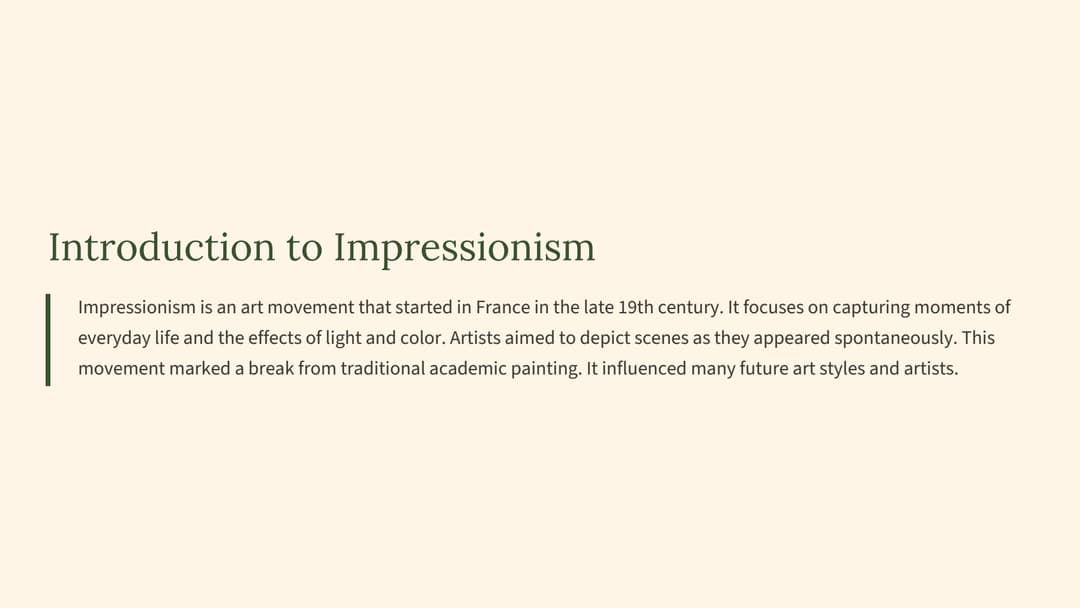
1. Introduction to Impressionism
Impressionism is an art movement that started in France in the late 19th century. It focuses on capturing moments of everyday life and the effects of light and color. Artists aimed to depict scenes as they appeared spontaneously. This movement marked a break from traditional academic painting. It influenced many future art styles and artists.
2. Historical Background
Impressionism emerged around 1870 as a response to academic art standards. Artists sought new ways to express their perception of the world. The movement developed in a time of social and technological change. It was initially met with criticism but gradually gained popularity. The movement was closely linked to changes in society and culture.
3. Main Founders of Impressionism
Key figures include Claude Monet, Pierre-Auguste Renoir, and Edgar Degas. These artists experimented with new techniques and ideas. Monet is famous for his landscape paintings and use of light. Renoir focused on human figures and social scenes. Degas was known for his depictions of dancers and urban life.
4. Characteristics of Impressionism
Impressionism is characterized by loose brushwork and vibrant colors. Artists often painted outdoors to capture natural light. They used short, quick strokes to depict movement and atmosphere. The focus was on perception rather than detailed realism. Shadows and reflections were painted with unusual colors.
5. Techniques Used in Impressionism
Impressionists used plein air painting to work outside. They applied paint in small, visible strokes. Color was applied side by side without mixing, creating optical effects. They paid special attention to the effects of sunlight and weather. This approach gave paintings a lively and spontaneous feel.
6. Famous Impressionist Works
Some well-known paintings include Monet's Water Lilies and Impression, Sunrise. Renoir's Dance at Le Moulin de la Galette is also iconic. Degas' The Ballet Class is a notable example. These works showcase the movement's focus on light, color, and everyday scenes. They remain influential and widely admired.
7. Impact on Art and Society
Impressionism challenged traditional artistic standards and techniques. It opened the door for modern art movements like Post-Impressionism and Cubism. The movement emphasized individual perception and innovation. It influenced not only painting but also photography and other arts. Impressionism changed how people viewed and appreciated art.
8. Legacy of Impressionism
Today, impressionism is celebrated for its innovative approach. It remains popular among artists and art lovers worldwide. Museums around the world display impressionist works. The movement's emphasis on light and color continues to inspire new generations. Its influence is seen in many contemporary art styles.
9. Conclusion and Summary
Impressionism was a revolutionary art movement that changed the course of art history. Founded by innovative artists who sought new ways to see and depict the world. Its techniques and ideas remain relevant today. Impressionism's focus on perception and natural beauty continues to inspire. It is a testament to the power of artistic experimentation.