
Предпросмотр презентации

Полную презентацию можно получить по почте после оплаты
Напишите, что изменить — перегенерим под ваши критерии.
Что вы получите
10–15 слайдов
Профессиональный дизайн
Понятная структура
Формат — PPTX
Готовая презентация за несколько минут
Примеры готовых работ
Психосоматика в жизни человека: как эмоции влияют на тело
Сон в жизни подростка: почему это важно
Что не подходит?
Нажмите, если это про вас — ответ анонимный
Основная информация
Название
Импрессионизм. Все слайды на английском языке. Кто основал импрессионизм.
Краткое описание
This presentation explores the origins of Impressionism, its main founders, and its impact on art. It provides an overview of the movement's development and significance.
Текст презентации
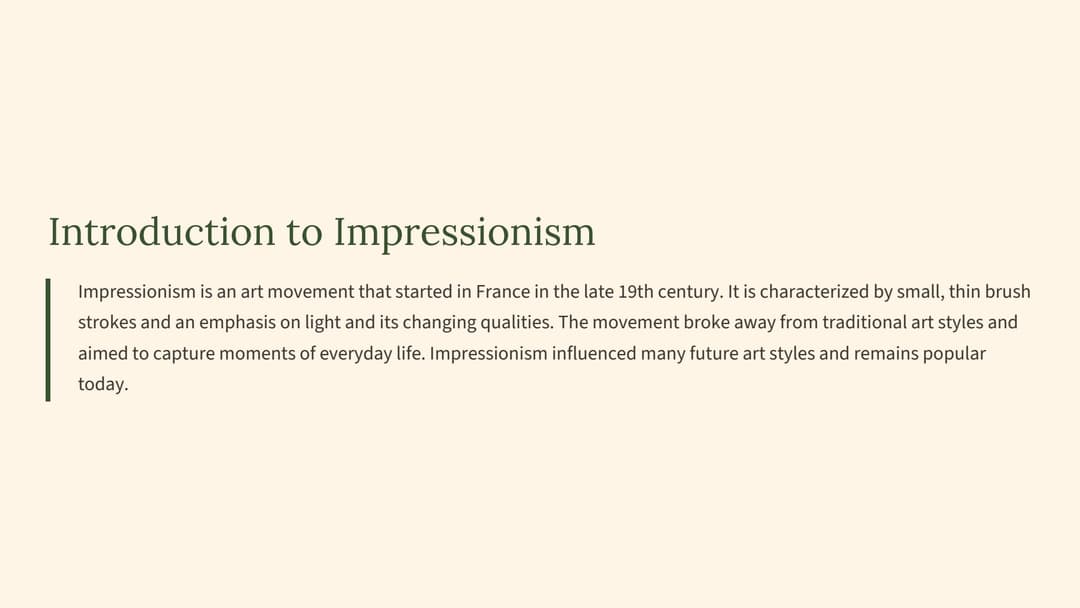
1. Introduction to Impressionism
Impressionism is an art movement that started in France in the late 19th century. It is characterized by small, thin brush strokes and an emphasis on light and its changing qualities. The movement broke away from traditional art styles and aimed to capture moments of everyday life. Impressionism influenced many future art styles and remains popular today.
2. Historical Context
Impressionism emerged during a time of social and technological change in France. The invention of photography influenced artists to focus on new ways of seeing and representing reality. The movement was also a response to academic art, which was considered too formal and rigid. Artists sought to express their personal impressions of the world around them.
3. Key Characteristics of Impressionism
Impressionist paintings often depict outdoor scenes and use vibrant colors. Artists applied paint in loose, quick strokes to capture the essence of a scene rather than fine details. The focus was on the effects of light and atmosphere. This approach created a sense of movement and spontaneity in the artwork.
4. Main Founders of Impressionism
The movement was founded by a group of artists who shared similar ideas. Among the most important were Claude Monet, Pierre-Auguste Renoir, and Camille Pissarro. These artists experimented with new techniques and often exhibited their work outside traditional galleries. Their collaboration helped define the style of Impressionism.
5. Claude Monet’s Role
Claude Monet is often considered the leading figure of Impressionism. He focused on capturing natural light and changing weather conditions in his paintings. Monet’s series of water lilies and haystacks are famous examples of his work. His innovative use of color and light greatly influenced the movement.
6. Other Influential Artists
Pierre-Auguste Renoir was known for his vibrant and lively scenes of social life. Camille Pissarro contributed with his landscape paintings and rural scenes. Edgar Degas focused on dancers and urban life, adding a different perspective to Impressionism. Each artist brought unique elements to the movement.
7. Impressionism’s Impact on Art
Impressionism challenged traditional artistic standards and opened the way for modern art. It encouraged artists to experiment with new techniques and subjects. The movement also promoted the idea of painting en plein air, or outdoors. Its influence can be seen in later styles like Post-Impressionism and Fauvism.
8. Reception and Criticism
Initially, Impressionism was met with mixed reactions from critics and the public. Some saw it as unfinished or chaotic. Over time, however, it gained recognition and became highly influential. Today, Impressionist paintings are among the most valued and celebrated artworks in the world.
9. Legacy of Impressionism
The movement revolutionized the approach to painting and inspired many artists worldwide. It emphasized personal expression and experimentation. Museums around the world hold extensive collections of Impressionist works. The movement remains a symbol of innovation and artistic freedom.
10. Conclusion and Summary
Impressionism was a groundbreaking art movement founded by artists like Monet, Renoir, and Pissarro. It focused on capturing light, movement, and everyday scenes with new techniques. The movement challenged traditional art and influenced future styles. Its legacy continues to inspire artists and art lovers today.