
Загружаем работу
Учтём индивидуальные пожелания, критерии и методичку вашего преподавателя.
Полную презентацию можно получить по почте после оплаты
Посмотрите пример — что говорить по первым слайдам, прежде чем оплатить.
Напишите, что изменить — перегенерим под ваши критерии.
10–15 слайдов
Профессиональный дизайн
Понятная структура
Формат — PPTX
Готовая презентация за несколько минут
Нажмите, если это про вас — ответ анонимный
Название
Народ якуты на амнглийском
Краткое описание
This presentation provides an overview of the Yakuts, their culture, history, and traditions, explained in English. It aims to introduce the audience to the unique aspects of the Yakut people.
Текст презентации
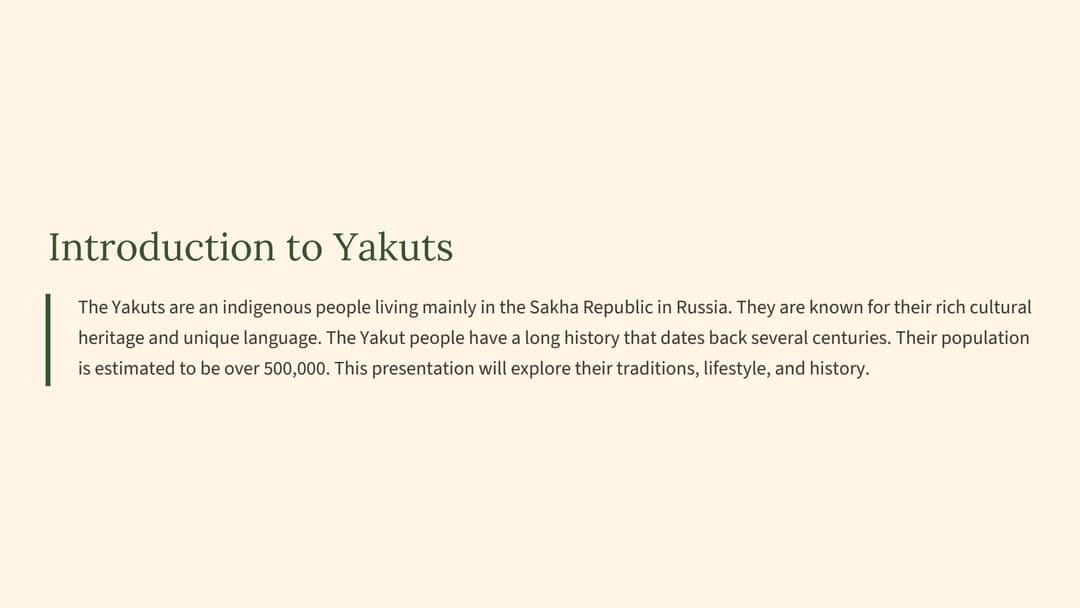
1. Introduction to Yakuts
The Yakuts are an indigenous people living mainly in the Sakha Republic in Russia. They are known for their rich cultural heritage and unique language. The Yakut people have a long history that dates back several centuries. Their population is estimated to be over 500,000. This presentation will explore their traditions, lifestyle, and history.
2. Geographical Location
Yakuts primarily inhabit the Sakha Republic, also known as Yakutia, in northeastern Russia. The region is known for its extreme cold climate and vast landscapes. Yakutia is one of the largest and coldest regions in Russia. The area is rich in natural resources like diamonds and gold. The geographical setting has greatly influenced the Yakut way of life.
3. Language and Identity
The Yakut language is part of the Turkic language family. It is an important element of their cultural identity. Many Yakuts are bilingual, speaking both Yakut and Russian. The language has its own alphabet and unique expressions. Preserving the language is vital for maintaining their cultural heritage.
4. Traditional Clothing and Crafts
Yakut traditional clothing is designed for cold weather, often made from animal skins. They wear elaborate headdresses and embroidered garments during festivals. Craftsmanship includes jewelry, woodwork, and embroidery. These crafts reflect their history and environment. Clothing and crafts are important symbols of their identity.
5. Festivals and Celebrations
Yakuts celebrate several traditional festivals throughout the year. The Ysyakh festival is the most famous, marking the summer solstice. It includes singing, dancing, and horse racing. These celebrations strengthen community bonds and preserve traditions. They are an important part of Yakut cultural life.
6. Traditional Livelihoods
Historically, Yakuts were hunters, fishers, and reindeer herders. They also engaged in horse breeding and cattle raising. Today, many still practice traditional livelihoods alongside modern jobs. Their economy is also based on natural resource extraction. These activities are vital for their survival and cultural continuity.
7. Religious Beliefs and Practices
Yakuts traditionally practiced shamanism and animism. They believed in spirits of nature and ancestors. Christianity, especially Russian Orthodoxy, has also become widespread. Many festivals and rituals are connected to their spiritual beliefs. Religion plays an important role in their community life.
8. Modern Life and Challenges
Today, Yakuts live in both rural and urban areas. They face challenges such as climate change and economic development. Preservation of their language and culture is a concern. Education and government programs aim to support their traditions. Balancing modernity and tradition is an ongoing process.
9. Cultural Contributions
Yakuts have contributed to arts, music, and literature. Their epic poetry and traditional music are well known. They also participate in regional and international cultural festivals. These contributions help promote their identity globally. Preserving their culture is important for future generations.
10. Conclusion and Future Outlook
The Yakut people have a rich cultural heritage that continues to thrive despite challenges. Efforts are being made to preserve their language, traditions, and environment. Their resilience and adaptability are key to their future. Understanding their culture helps foster respect and appreciation. The Yakuts remain an important part of Russia's diverse cultural landscape.
Посмотрите другие работы, которые создали пользователи.
Проект изучает роль конкуренции в рыночной экономике и ее влияние на развитие бизнеса и потребителей. В нем рассматриваются основные понятия, виды и важность конкуренции.
Данный реферат посвящен изучению исторического события — первой морской победы российского флота у мыса Гангут. Анализируется значение этого сражения для развития российского военно-морского дела и укрепления государства. Рассматриваются причины, ход и последствия битвы, а также роль Петра Первого как лидера. Важность исследования заключается в понимании формирования морской мощи России и её исторического значения.
Проект изучает деятельность ГИБДД и её влияние на снижение числа ДТП с участием детей. В работе рассматриваются методы профилактики и роль сотрудников ГИБДД в обеспечении безопасности детей на дорогах.
Данный реферат рассматривает четвертый этап статистического исследования, который включает в себя проведение научного анализа собранных данных. Важность этого этапа заключается в выявлении закономерностей и выводов, основанных на статистических данных. Анализ помогает понять причины и следствия изучаемых явлений, что способствует принятию обоснованных решений. Такой подход обеспечивает научную достоверность и объективность исследования.
Данная презентация рассказывает о том, как игровые методы помогают в обучении математике у младших школьников. Рассматриваются виды игр, их преимущества и способы внедрения в учебный процесс.
Данная презентация содержит основные этапы и рекомендации по созданию успешного бизнеса в сфере кофейной индустрии. Рассматриваются вопросы планирования, анализа рынка и организации работы кофейни.
Данный реферат посвящен изучению элементов симметрии правильных многограников, таких как зеркальные оси, центры симметрии и оси вращения. Исследование этих элементов важно для понимания структурной организации геометрических фигур и их свойств. Анализ элементов симметрии помогает в решении задач по классификации и созданию новых геометрических форм. Это знание широко применяется в математике, архитектуре и инженерных науках.
Проект изучает создание и использование скваречника, а также его роль в садоводстве. В нем рассматриваются методы изготовления и применения этого устройства.
Проект рассказывает о различных породах кошек, их особенностях и роли в жизни человека. В нем изучаются интересные факты о кошках и мнение людей о них.
Проект изучает влияние интерактивных игр на развитие детей. Рассматриваются преимущества и возможные недостатки таких игр.
Опишите тему — нейросеть соберёт презентацию со слайдами, тезисами и выводами.