
Загружаем работу
Учтём индивидуальные пожелания, критерии и методичку вашего преподавателя.
Полную презентацию можно получить по почте после оплаты
Посмотрите пример — что говорить по первым слайдам, прежде чем оплатить.
10–15 слайдов
Профессиональный дизайн
Понятная структура
Формат — PPTX
Готовая презентация за несколько минут
Нажмите, если это про вас — ответ анонимный
Название
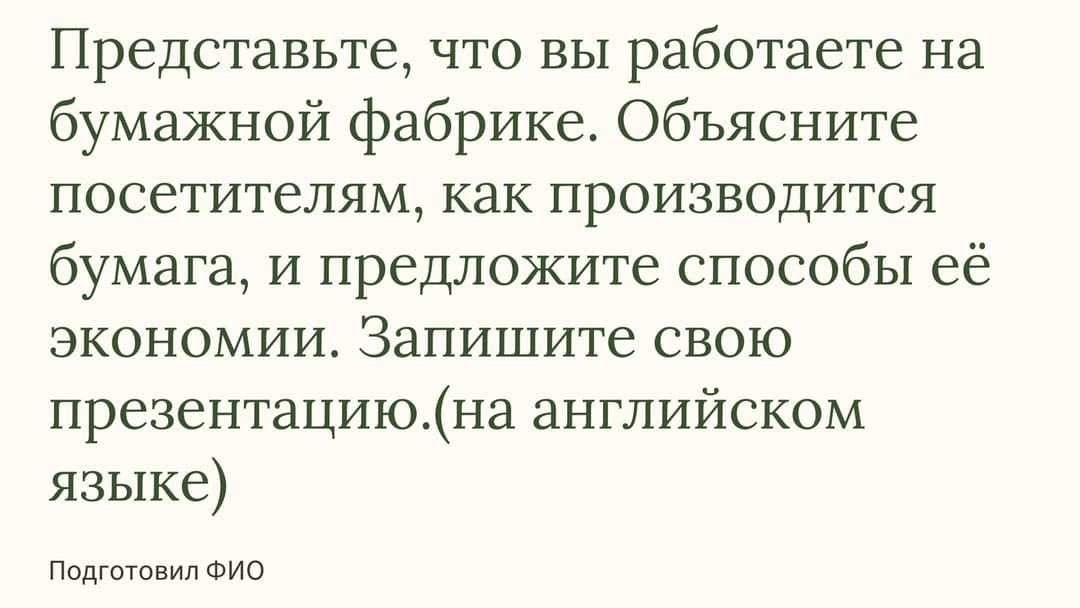
Представьте, что вы работаете на бумажной фабрике. Объясните посетителям, как производится бумага, и предложите способы её экономии. Запишите свою презентацию.(на английском языке)
Краткое описание
This presentation explains how paper is made at a paper factory and offers practical ways to save paper. It aims to inform visitors about the manufacturing process and encourage responsible usage.
Текст презентации
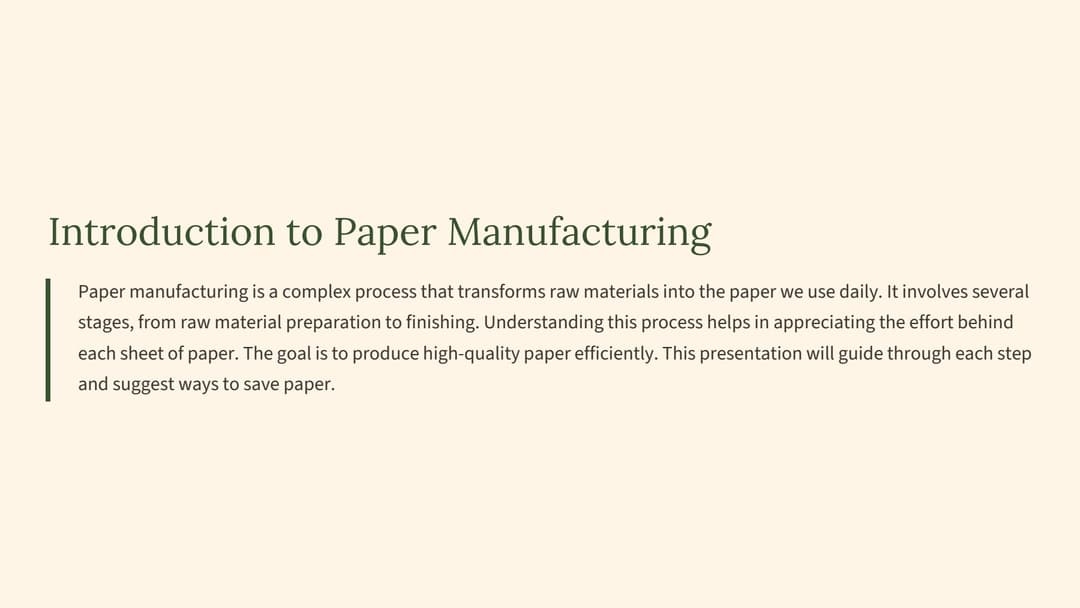
1. Introduction to Paper Manufacturing
Paper manufacturing is a complex process that transforms raw materials into the paper we use daily. It involves several stages, from raw material preparation to finishing. Understanding this process helps in appreciating the effort behind each sheet of paper. The goal is to produce high-quality paper efficiently. This presentation will guide through each step and suggest ways to save paper.
2. Raw Materials for Paper Production
The main raw materials for paper are wood, recycled paper, and other plant fibers. Wood is processed into pulp, which is the primary material for paper. Recycling paper helps reduce waste and saves natural resources. The quality of raw materials affects the final product. Choosing sustainable sources is important for environmental conservation.
3. Pulping Process
The raw materials are broken down into fibers through pulping. There are mechanical and chemical pulping methods. Mechanical pulping involves grinding wood chips, while chemical pulping uses chemicals to separate fibers. The pulp is then cleaned and processed further. This step is crucial for determining the paper's strength and quality.
4. Forming the Paper Sheet
The pulp is diluted with water and spread onto a moving screen called a wire. Excess water drains away, leaving a mat of fibers. This mat is pressed to remove remaining water and to bond the fibers. The process creates a continuous sheet of paper. The sheet is then dried using heated rollers.
5. Drying and Finishing
The paper sheet passes through heated rollers to remove moisture completely. It is then pressed and smoothed to improve surface quality. Additional treatments may include coating or coloring. The finished paper is wound into large rolls or cut into sheets. Quality control ensures the paper meets required standards.
6. Packaging and Storage
Finished paper is carefully packaged to prevent damage during transportation. Rolls and sheets are stored in controlled environments to maintain quality. Proper storage extends the lifespan of the paper. Packaging also helps in easy handling and distribution. Efficient logistics ensure timely delivery to customers.
7. Environmental Impact of Paper Production
Paper manufacturing consumes natural resources and energy, which can impact the environment. Recycling and sustainable sourcing help reduce this impact. Wastewater and emissions are managed through filtration and treatment. Innovations in technology aim to make the process more eco-friendly. Responsible production is essential for environmental conservation.
8. Ways to Save Paper in Daily Life
Using digital documents instead of printed ones can significantly reduce paper consumption. Printing only when necessary and using double-sided printing helps save paper. Reusing paper and recycling old sheets also contribute to conservation. Being mindful of paper use at work and home can make a big difference. Small actions add up to substantial savings.
9. Benefits of Saving Paper
Reducing paper use helps conserve natural resources like trees and water. It also decreases energy consumption and pollution from manufacturing. Saving paper can lead to cost savings for businesses and individuals. It promotes environmental responsibility and sustainability. Everyone can contribute to protecting the environment through mindful paper use.
10. Conclusion and Final Thoughts
Understanding how paper is made encourages responsible consumption. Implementing simple saving strategies can have a positive environmental impact. Sustainable practices in paper production and use are essential for future generations. Awareness and action are key to reducing waste. Every effort counts in preserving our natural resources.
Посмотрите другие работы, которые создали пользователи.
Данный реферат исследует особенности административной ответственности иностранных граждан и лиц без гражданства в России. Анализируются правовые основы и практические аспекты применения ответственности. Важность работы заключается в необходимости обеспечения правового порядка и соблюдения законодательства. Рассматриваются возможные меры и последствия для нарушителей.
Данный реферат исследует, как социальные сети влияют на развитие современного русского языка. Анализируются изменения в лексике, стилистике и грамматике, вызванные активным использованием социальных платформ. Это важно для понимания процессов языковой эволюции и формирования новых коммуникативных норм. Работа помогает понять роль цифровых технологий в современном языковом пространстве.
Данный реферат рассматривает понятие скорости и её измерение, объясняет важность правильного выбора единиц измерения для точных расчетов. Изучение скорости помогает понять движение предметов и явлений в природе и технике. В работе рассматриваются основные единицы измерения скорости и способы их применения. Такой материал важен для формирования базовых знаний по физике и развития аналитического мышления.
Проект исследует физические свойства воды при нагревании и причины её закипания. В рамках работы изучаются научные основы и проводят социальный опрос о знаниях людей по данной теме.
Эта презентация рассматривает, как физика влияет на игру в футбол. Обсуждаются основные физические принципы и их применение на поле. В конце делаются выводы о важности физики для игроков и тренеров.
Презентация рассматривает особенности питания современного общества, его влияние на здоровье и образ жизни. Анализируются причины изменений в пищевых предпочтениях и возможные последствия.
Проект изучает события Пороховой революции, её причины и последствия в Европе и России. В работе рассматриваются исторические факты и мнения людей о данном событии.
Этот проект изучает, как использовать английский язык для проведения экскурсий. В нем рассматриваются методы обучения и практические навыки общения на английском.
Проект посвящен изучению текущего состояния рынка и выявлению потребностей потребителей. В рамках работы проводится анализ информации и социальный опрос.
Проект исследует формы правильных многогранников, их встречаемость в природе и способы моделирования. В работе рассматриваются теоретические основы и практические методы создания моделей.
Опишите тему — нейросеть соберёт презентацию со слайдами, тезисами и выводами.