
Загружаем работу
Учтём индивидуальные пожелания, критерии и методичку вашего преподавателя.
Полную презентацию можно получить по почте после оплаты
Посмотрите пример — что говорить по первым слайдам, прежде чем оплатить.
10–15 слайдов
Профессиональный дизайн
Понятная структура
Формат — PPTX
Готовая презентация за несколько минут
Нажмите, если это про вас — ответ анонимный
Название
Презентация на тему "Pollution" на английском языке
Краткое описание
This presentation explains the concept of pollution, its types, causes, effects, and ways to reduce it. It aims to raise awareness about environmental protection and the importance of sustainable practices.
Текст презентации
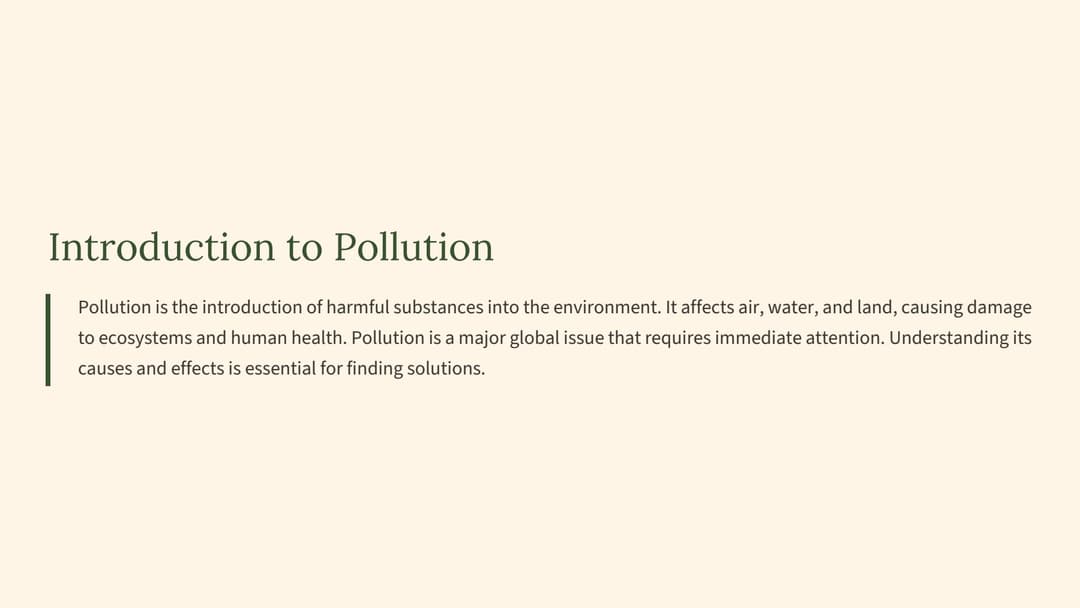
1. Introduction to Pollution
Pollution is the introduction of harmful substances into the environment. It affects air, water, and land, causing damage to ecosystems and human health. Pollution is a major global issue that requires immediate attention. Understanding its causes and effects is essential for finding solutions.
2. Types of Pollution
There are several types of pollution including air pollution, water pollution, soil pollution, and noise pollution. Each type has specific sources and impacts. Air pollution mainly comes from factories and vehicles. Water pollution often results from waste disposal and chemical runoff.
3. Sources of Pollution
Pollution sources can be natural or human-made. Human activities such as industrial processes, transportation, and agriculture are the main contributors. Improper waste disposal and deforestation also increase pollution levels. Reducing pollution requires controlling these sources.
4. Effects of Air Pollution
Air pollution causes health problems like respiratory diseases and allergies. It also contributes to environmental issues such as acid rain and climate change. Pollutants like carbon monoxide and sulfur dioxide are especially harmful. Protecting air quality is vital for health and the environment.
5. Effects of Water Pollution
Water pollution affects drinking water supplies and aquatic life. Contaminants from chemicals and waste make water unsafe for consumption. It can lead to the spread of waterborne diseases. Protecting water sources is essential for public health and biodiversity.
6. Soil Pollution and Its Causes
Soil pollution occurs due to the dumping of waste, use of chemicals, and industrial activities. It reduces soil fertility and can harm plants and animals. Contaminated soil can also affect food safety. Proper waste management is necessary to prevent soil pollution.
7. Impact on Ecosystems and Human Health
Pollution damages ecosystems by killing plants and animals and disrupting natural processes. It also poses serious health risks to humans, including cancers and neurological disorders. Protecting the environment helps ensure a healthier future for all living beings.
8. Prevention and Control Measures
Reducing pollution involves using cleaner technologies and renewable energy sources. Proper waste disposal and recycling are also important. Governments and communities can implement regulations and awareness campaigns. Individual actions like conserving energy and reducing waste matter too.
9. Global Efforts to Combat Pollution
International organizations promote policies and agreements to reduce pollution worldwide. Examples include the Paris Agreement and various environmental protocols. Cooperation among countries is essential for effective pollution control. Sharing knowledge and technology can help address this global challenge.
10. Conclusion and Future Outlook
Pollution remains a significant challenge that requires continuous efforts. Adopting sustainable practices and raising awareness are key steps. Protecting the environment benefits health, economy, and future generations. Collective action can lead to a cleaner and healthier planet.
Посмотрите другие работы, которые создали пользователи.
Этот проект изучает использование искусственного интеллекта для выбора и сборки компьютера. Рассматриваются методы автоматизации процесса подбора деталей и создания оптимальной конфигурации.
Данный реферат исследует понятие Родины, её значение для человека и общества. Рассматриваются исторические и культурные аспекты, связанные с этим понятием. Анализируется влияние Родины на формирование национальной идентичности. Важность изучения темы заключается в укреплении чувства патриотизма и сохранении культурных ценностей.
Этот проект рассказывает о том, почему молоко полезно для детей. В нем изучаются свойства молока и мнение одноклассников о его употреблении.
Проект исследует причины популярности виртуального общения через социальные сети и сравнивает его с живым общением. В работе анализируются мнения людей и причины их выбора.
Проект исследует современные технологии, применяемые в автоспорте, и их влияние на безопасность и эффективность гонок. В работе рассматриваются инновационные разработки и их роль в развитии автоспорта.
Данный реферат посвящен изучению вопросов, связанных с оценкой пожарной опасности и обеспечением пожарной безопасности на объекте. Рассматриваются причины возникновения пожаров, методы их предотвращения и меры защиты. Важность данной темы обусловлена необходимостью сохранения жизни, здоровья людей и сохранности имущества. Анализируется роль систем пожаротушения и правил поведения в случае пожара для повышения уровня безопасности.
Реферат посвящен изучению города Сиань, одного из древнейших и культурных центров Китая. В работе рассматриваются исторические особенности, архитектурные памятники и современное развитие города. Анализ важности сохранения культурного наследия и его влияния на туризм и экономику. Такой подход помогает понять роль города в мировой истории и современности.
Проект изучает виды биологически активных веществ, содержащихся в растениях, и их влияние на организм человека. В работе рассматриваются способы их получения и применения в медицине и питании.
Данная курсовая работа посвящена анализу методов и подходов к сестринскому уходу за пациентами с остеоартрозом и остеопорозом, а также выявлению особенностей ухода при этих заболеваниях.
Реферат посвящен изучению процесса мейоза, важного для понимания наследственности и генетической разнообразия. В нем рассматриваются этапы мейоза, его роль в размножении и эволюции организмов. Анализируются механизмы, обеспечивающие передачу генетической информации. Такой анализ помогает понять основы наследования и генетической изменчивости в биологических системах.
Опишите тему — нейросеть соберёт презентацию со слайдами, тезисами и выводами.