
Предпросмотр презентации
Полную презентацию можно получить по почте после оплаты
Напишите, что изменить — перегенерим под ваши критерии.
Что вы получите
10–15 слайдов
Профессиональный дизайн
Понятная структура
Формат — PPTX
Готовая презентация за несколько минут
Примеры готовых работ
Психосоматика в жизни человека: как эмоции влияют на тело
Сон в жизни подростка: почему это важно
Что не подходит?
Нажмите, если это про вас — ответ анонимный
Основная информация
Название
Сделай презентацию на английском языке среднего уровня на тему "Compliance with MARPOL 73/78 rules"
Краткое описание
This presentation explains the importance of MARPOL 73/78 regulations for ships. It covers key requirements and how ships can ensure compliance to protect the environment.
Текст презентации
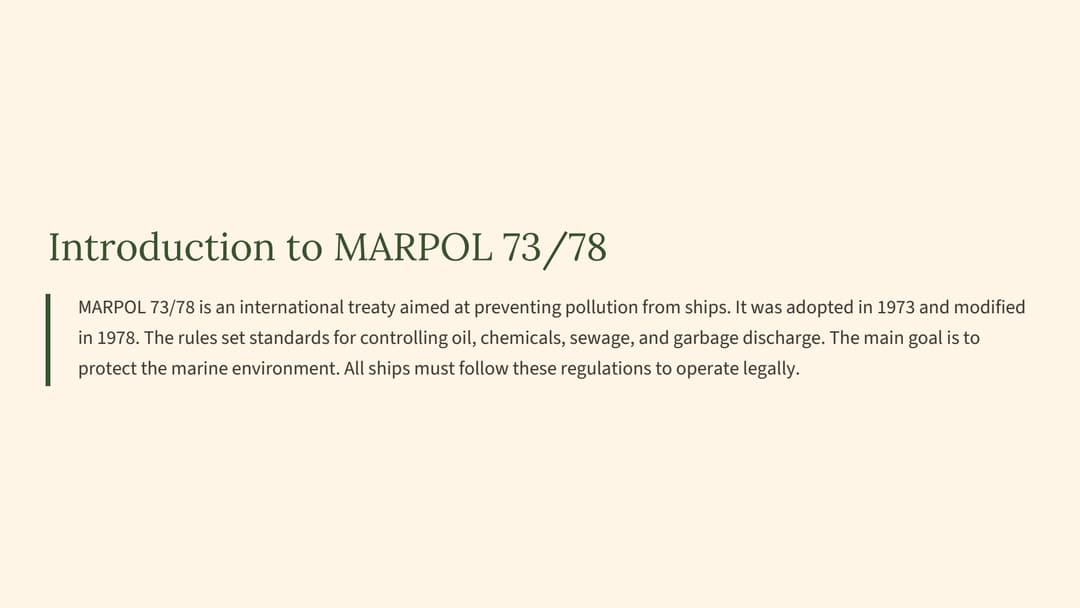
1. Introduction to MARPOL 73/78
MARPOL 73/78 is an international treaty aimed at preventing pollution from ships. It was adopted in 1973 and modified in 1978. The rules set standards for controlling oil, chemicals, sewage, and garbage discharge. The main goal is to protect the marine environment. All ships must follow these regulations to operate legally.
2. Objectives of MARPOL
The main objective of MARPOL is to minimize pollution from ships. It aims to prevent oil spills and reduce other harmful discharges into the sea. The regulations also promote the use of environmentally friendly technologies. Compliance helps to preserve marine life and coastal areas. It is a vital part of global efforts to protect the environment.
3. Key MARPOL Annexes
MARPOL has six annexes, each covering different types of pollution. Annex I deals with oil pollution. Annex II covers harmful substances in bulk. Annex III regulates packaged harmful substances. Annex IV addresses sewage pollution. Annex V focuses on garbage disposal. Annex VI sets limits on air pollution from ships.
4. Ship Compliance Requirements
Ships must have proper equipment and procedures to meet MARPOL standards. They need to carry pollution prevention devices like oil record books and garbage management plans. Regular inspections ensure that ships follow the rules. Crew members should be trained to handle pollution prevention. Proper documentation is essential for legal compliance.
5. Pollution Prevention Equipment
Ships are equipped with oil filtering systems and sewage treatment plants. Garbage is stored properly and disposed of at designated facilities. Fuel and oil transfer procedures are carefully managed to prevent spills. These systems help ships meet discharge limits set by MARPOL. Maintenance of equipment is crucial for effective pollution control.
6. Monitoring and Inspection
Port State Control officers inspect ships for compliance during port visits. They check records, equipment, and procedures. Non-compliance can lead to penalties or detention. Continuous monitoring ensures that ships maintain standards at sea. Proper documentation and regular audits support compliance efforts.
7. Role of Crew and Management
Crew members are responsible for following pollution prevention procedures. They receive training on MARPOL regulations and equipment use. Ship management must ensure compliance through policies and audits. Awareness and responsibility are key to preventing pollution incidents. Effective communication helps maintain high standards.
8. Challenges in Compliance
Some ships face difficulties in meeting strict standards due to aging equipment or lack of resources. Enforcement varies across regions, affecting uniform compliance. New regulations require ongoing training and investment. Collaboration among international authorities helps improve compliance. Overcoming these challenges is essential for environmental protection.
9. Conclusion and Future Outlook
Compliance with MARPOL is vital for protecting the marine environment. Advances in technology can help ships meet regulations more easily. Continuous education and stricter enforcement will improve compliance rates. International cooperation remains essential. Protecting oceans requires ongoing commitment from all maritime stakeholders.