
Предпросмотр презентации
Полную презентацию можно получить по почте после оплаты
Напишите, что изменить — перегенерим под ваши критерии.
Что вы получите
10–15 слайдов
Профессиональный дизайн
Понятная структура
Формат — PPTX
Готовая презентация за несколько минут
Примеры готовых работ
Психосоматика в жизни человека: как эмоции влияют на тело
Сон в жизни подростка: почему это важно
Что не подходит?
Нажмите, если это про вас — ответ анонимный
Основная информация
Название
Традиций англоязычных страх вся текстовка должна быть на английском
Краткое описание
This presentation explores the main traditions and customs in English-speaking countries. It highlights their origins, significance, and how they are celebrated today.
Текст презентации
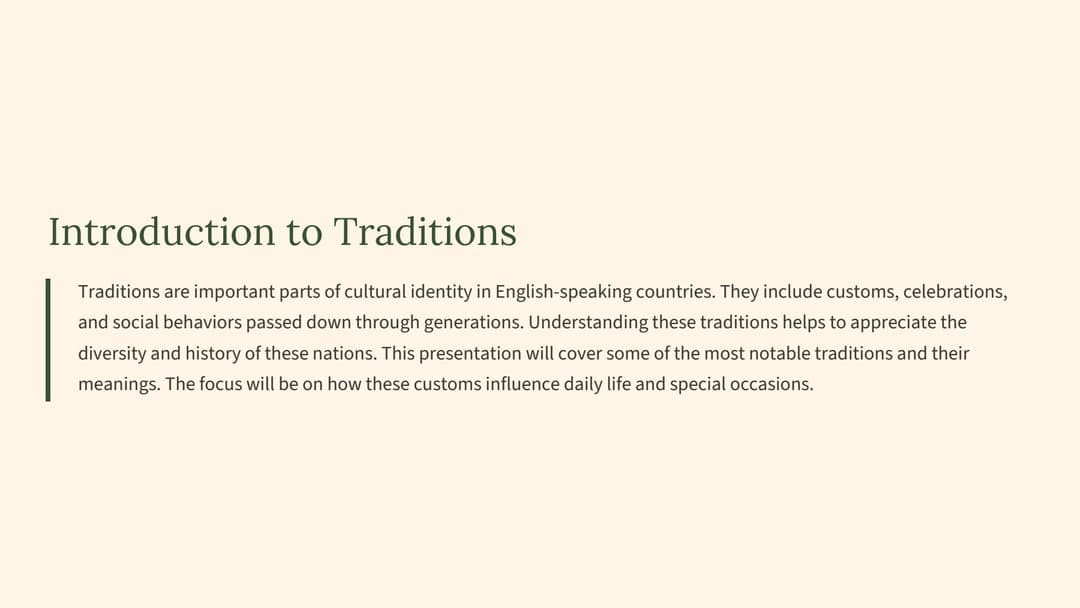
1. Introduction to Traditions
Traditions are important parts of cultural identity in English-speaking countries. They include customs, celebrations, and social behaviors passed down through generations. Understanding these traditions helps to appreciate the diversity and history of these nations. This presentation will cover some of the most notable traditions and their meanings. The focus will be on how these customs influence daily life and special occasions.
2. Historical Background
Many traditions in English-speaking countries have roots in history and historical events. Some customs originated from ancient times, while others developed more recently. The history of these traditions reflects the social and political changes over centuries. Understanding their origins provides insight into the values and beliefs of these societies. This background helps explain why certain customs are still important today.
3. National Holidays and Celebrations
National holidays are key traditions that celebrate a country's history and achievements. Examples include Independence Day in the United States and Guy Fawkes Night in the UK. These celebrations often involve fireworks, parades, and special ceremonies. They serve to reinforce national pride and unity. Each country has unique ways of commemorating their history through these events.
4. Traditional Food and Cuisine
Food plays a significant role in cultural traditions. Many English-speaking countries have traditional dishes that are enjoyed during holidays and festivals. Examples include roast dinners, pies, and regional specialties. Sharing traditional food helps preserve cultural identity and brings communities together. Culinary customs often have historical roots and reflect local resources.
5. Music and Dance Traditions
Music and dance are vital parts of cultural expression in these countries. Folk songs, national anthems, and traditional dances are performed during festivals and celebrations. They often tell stories or commemorate historical events. These artistic expressions help pass down cultural values and history. They also foster community spirit and national pride.
6. Clothing and Costume Traditions
Traditional clothing is often worn during special occasions and festivals. Examples include kilts in Scotland and folk costumes in various regions. These garments symbolize cultural identity and heritage. They are used in ceremonies, parades, and cultural festivals. Wearing traditional clothing helps preserve historical styles and customs.
7. Religious and Seasonal Customs
Religious beliefs influence many traditions and celebrations. Christmas, Easter, and other religious holidays are widely observed. Seasonal customs often mark changes in the year, such as harvest festivals and spring celebrations. These traditions reinforce community bonds and spiritual values. They also reflect the historical importance of religion in society.
8. Modern Adaptations of Traditions
Many traditional customs have evolved over time to fit modern lifestyles. New ways of celebrating and expressing traditions have emerged, influenced by globalization and technology. Despite changes, the core meanings often remain the same. Modern adaptations help keep traditions relevant and engaging for younger generations. They also allow for greater cultural exchange and understanding.
9. Challenges and Preservation
Preserving traditions can be challenging due to cultural shifts and modernization. Some customs risk fading away if not actively maintained. Efforts to preserve traditions include festivals, education, and cultural programs. These initiatives aim to keep the heritage alive for future generations. Recognizing the importance of traditions helps maintain cultural diversity and identity.
10. Conclusion and Summary
Traditions in English-speaking countries are diverse and deeply rooted in history and culture. They serve to unite communities, celebrate heritage, and pass down values. While some customs have changed over time, their significance remains strong. Understanding and respecting these traditions fosters appreciation and cultural awareness. Continued preservation ensures that these customs will be enjoyed by future generations.