
Предпросмотр презентации

Полную презентацию можно получить по почте после оплаты
Напишите, что изменить — перегенерим под ваши критерии.
Что вы получите
10–15 слайдов
Профессиональный дизайн
Понятная структура
Формат — PPTX
Готовая презентация за несколько минут
Примеры готовых работ
Психосоматика в жизни человека: как эмоции влияют на тело
Сон в жизни подростка: почему это важно
Что не подходит?
Нажмите, если это про вас — ответ анонимный
Основная информация
Название
Ниагарский водопад на английском языке
Краткое описание
This presentation provides an overview of Niagara Falls, including its history, geography, and significance. It aims to inform about one of the most famous natural attractions in the world.
Текст презентации
1. Introduction to Niagara Falls
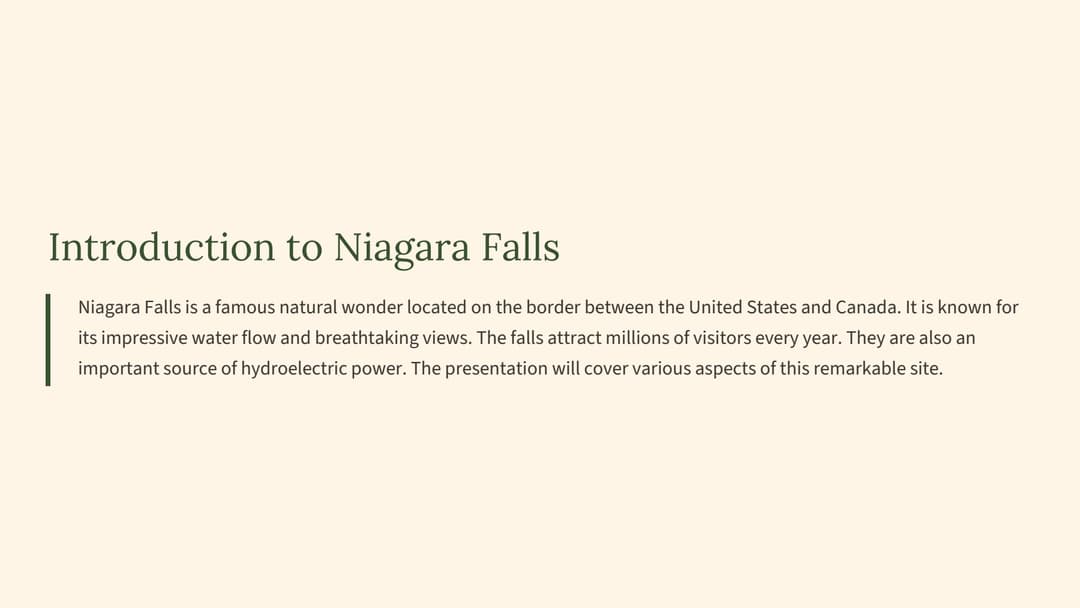
Niagara Falls is a famous natural wonder located on the border between the United States and Canada. It is known for its impressive water flow and breathtaking views. The falls attract millions of visitors every year. They are also an important source of hydroelectric power. The presentation will cover various aspects of this remarkable site.
2. Geography and Location
Niagara Falls is situated on the Niagara River, which connects Lake Erie to Lake Ontario. The falls consist of three main sections: Horseshoe Falls, American Falls, and Bridal Veil Falls. The area is part of the Niagara Gorge, a deep canyon carved by the river. The location is accessible from major cities like Toronto and New York. Its strategic position makes it a popular tourist destination.
3. History of Niagara Falls
The history of Niagara Falls dates back thousands of years, with indigenous peoples living in the area. European explorers arrived in the 17th century and named the falls. In the 19th century, the site became a popular tourist attraction. Engineers also started harnessing the water for hydroelectric power. Over time, the falls have become a symbol of natural beauty and engineering achievement.
4. Formation of the Waterfalls
Niagara Falls was formed during the last Ice Age, about 12,000 years ago. Melting glaciers created the Great Lakes and the Niagara River. The river eroded the rock layers, gradually creating the waterfalls. The process continues today, although at a slow rate. The falls are a dynamic natural feature that changes over time.
5. Hydroelectric Power Generation
Niagara Falls is one of the largest sources of hydroelectric power in North America. Several hydroelectric plants harness the water's energy to produce electricity. This power supplies millions of homes and businesses. The use of water for energy has helped reduce reliance on fossil fuels. It also demonstrates the importance of renewable energy sources.
6. Tourism and Attractions
Niagara Falls is a major tourist destination with many attractions. Visitors can enjoy boat rides close to the falls, observation decks, and walking trails. There are also museums, parks, and entertainment options nearby. The area offers hotels, restaurants, and shopping centers. Tourism plays a vital role in the local economy.
7. Wildlife and Environment
The area around Niagara Falls is home to diverse wildlife, including birds, fish, and small mammals. The environment is protected by parks and conservation efforts. The water quality and natural habitats are carefully managed. Visitors are encouraged to respect the natural surroundings. The ecosystem is an important part of the falls' appeal.
8. Environmental Challenges
Niagara Falls faces several environmental challenges, including pollution and habitat loss. Increased tourism can lead to waste and environmental degradation. Efforts are underway to protect the natural environment and promote sustainable tourism. Balancing development and conservation is crucial for the future of the falls. Ongoing research helps address these issues.
9. Cultural Significance
Niagara Falls has inspired many artists, writers, and filmmakers over the years. It is a symbol of natural beauty and power. The falls also hold cultural and historical importance for local communities. They are featured in legends and folklore. The site continues to inspire and attract people worldwide.
10. Conclusion and Summary
Niagara Falls is a remarkable natural feature with a rich history and cultural significance. It provides hydroelectric power, attracts millions of visitors, and supports diverse ecosystems. Protecting and preserving the falls is essential for future generations. The site remains a symbol of nature's power and beauty, inspiring awe and admiration.